
Nivalis Nights food, dishes and ingredients
Nivalis Nights sorts its menu into nine dish categories, and every dish needs three things: a recipe, its ingredients and the right kitchen equipment. The studio counts more than 240 ingredients and 190 dishes in the game.
The nine categories
Meat dishesFish and seafoodSaladsSandwichesPizzaSoupsDessertsSnacksDrinks
Dishes also differ in how upmarket they are: “some are decidedly more exclusive than others”, and the mix you serve decides which customers you attract.
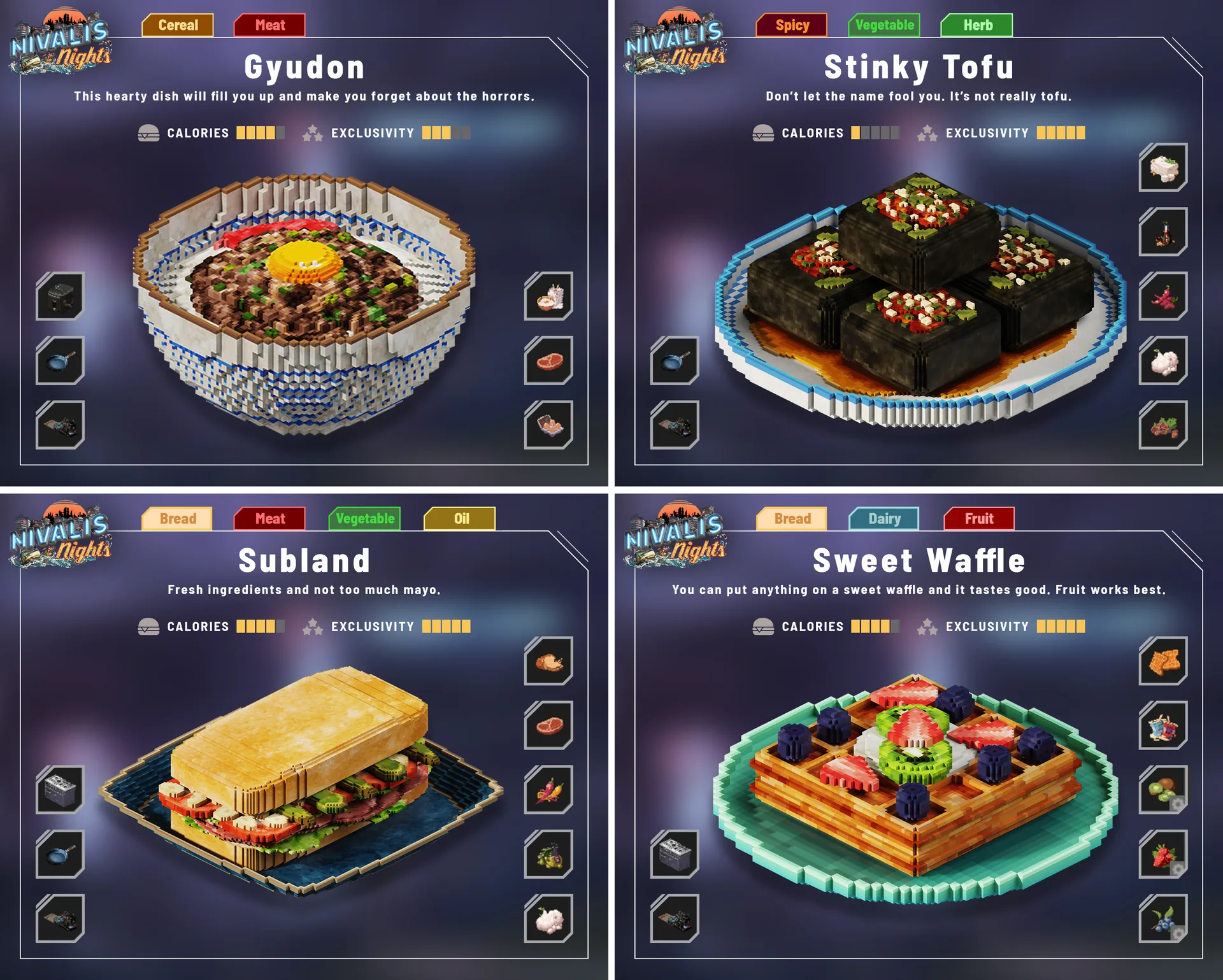
The four official dish cards
The only dishes shown in full so far, with the tags and line printed on each card:
| Dish | Tags | Card line |
|---|---|---|
| Gyudon | CerealMeat | “This hearty dish will fill you up and make you forget about the horrors.” |
| Stinky Tofu | SpicyVegetableHerb | “Don't let the name fool you. It's not really tofu.” |
| Subland | BreadMeatVegetableOil | “Fresh ingredients and not too much mayo.” |
| Sweet Waffle | BreadDairyFruit | “You can put anything on a sweet waffle and it tastes good. Fruit works best.” |
Each card also carries a five-step bar for calories and one for exclusivity. The cards are promotional art, so in-game values may differ.
Other named dishes
- Cola Chicken
- Crispy, the kind of dish you eat in front of a film.
- Summer Salad
- Seasonal: banned in every season except summer.
- Meridian Pizza
- Shared by the slice. It shares its name with Meridian Market, the district your first bar is in.
- VegCoffee
- A drink for a rainy afternoon.
- Nigiri
- A fish dish your staff can serve.
Recipes you unlock and change
New recipes arrive as you progress, and “you’ll unlock new recipes and even customize them”. What customizing changes (cost, exclusivity, customer appeal) is not known yet.
Buying ingredients: reading the vendor screen
Ingredients come from three places: “Source your ingredients from marketplaces or by growing or fishing for your own.” Vendors sell through a shop screen. The greengrocer run by Far Hifadden has tabs for all goods, ingredients, furniture and seeds.
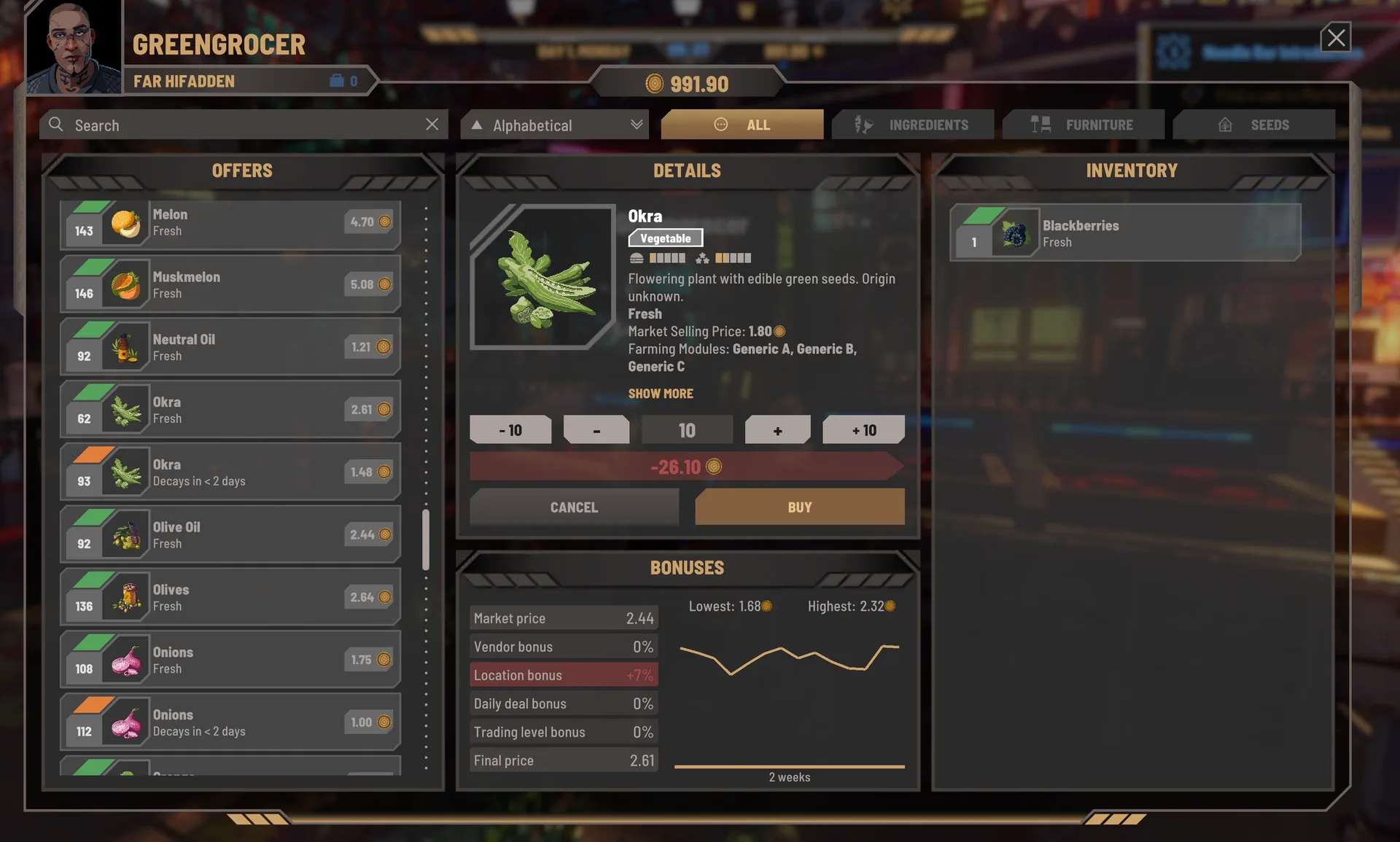
Freshness. The same item can be listed twice, once as Fresh and once as decaying within two days, and on this screen the decaying batch is the cheaper one. That is a trade to weigh against how soon it will be cooked.
The price stack. The final price is built from five lines:
| Line on the screen | What it shows |
|---|---|
| Market price | The base figure, shown next to a two-week price graph with its lowest and highest points. |
| Vendor bonus | Labelled per vendor. Buying more often from certain vendors can also get you better prices. |
| Location bonus | An adjustment for where you buy. On the screen above it is the only one active, and it raises the price. |
| Daily deal bonus | A deal of the day, at zero on the screen above. |
| Trading level bonus | Tied to a trading level. How that level rises is not known yet. |
Market prices also move with the news. The morning newspaper can warn of things like “the start of the fishing season or a sudden drought”, which change what is available and what it costs. The ingredient panel also lists “Farming Modules”, which points at the greenhouse side of the game.